
Your monthly AI bill says you spent $4,200. Great. But which task caused it? Was it the document summarizer burning through GPT-4o, or the email generator quietly racking up tokens on a model three tiers too expensive? Monthly totals are a ceiling number, not a diagnostic tool.
According to a 2025 survey by Andreessen Horowitz, 78% of enterprises lack visibility into which specific workloads drive their AI spending. That's like getting a restaurant bill with no line items. You know you ate. You don't know what cost $90.
The fix is straightforward: tag every AI call by task type, measure cost per unit of work, and optimize the tasks that actually matter. This article shows you how.
TL;DR: Monthly AI totals hide 10-50x cost differences between task types. 78% of enterprises lack visibility into which specific workloads drive spending (a16z, 2025). Tagging each API call by task type and benchmarking cost per unit of work reveals that optimizing your top 3 most expensive tasks typically cuts total AI spend by 30-50%.
Key Takeaways
- Monthly AI bills hide per-task cost differences of 10-50x between workflows
- Tagging each API call by task type reveals which features drain your budget
- Per-task benchmarking exposes outlier calls that cost 5-8x the median (Helicone, 2025)
- Optimizing your top 3 most expensive tasks typically cuts total AI spend by 30-50%
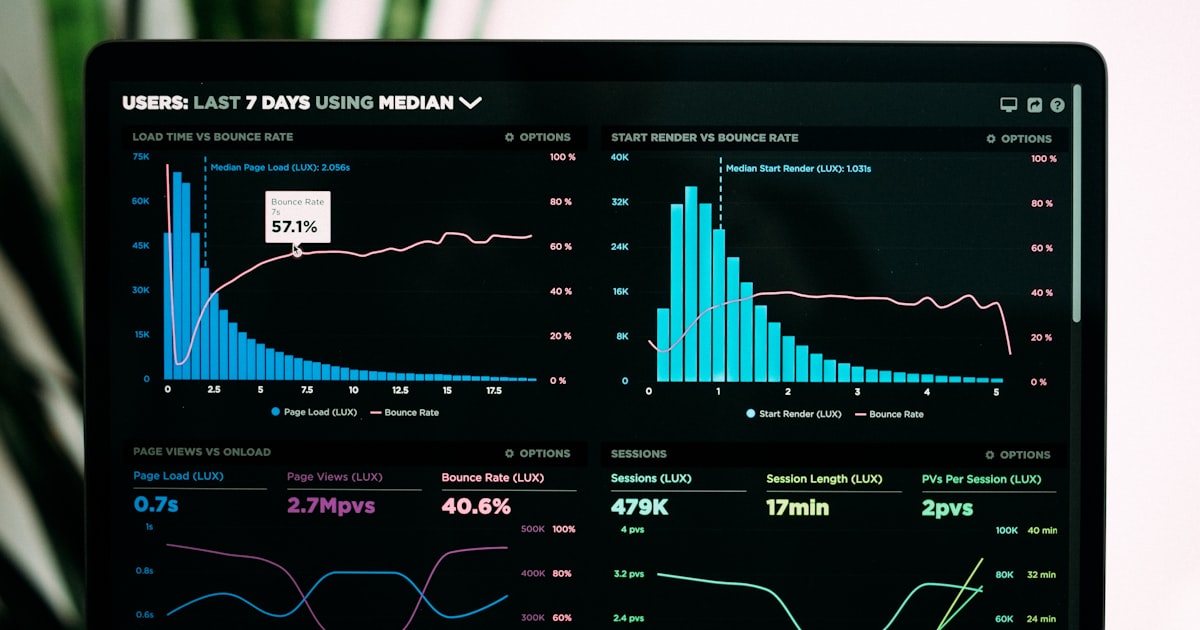
Why Do Monthly AI Bills Fail You?
Monthly aggregation hides a 10-50x cost variance between task types, according to analysis from Helicone (2025). A document summarization call might cost $0.03 while a code review call costs $0.45, yet both show up as one blended line on your invoice.
Think about it this way. You run five AI-powered features: email drafting, document summarization, code review, customer support triage, and content generation. Each uses different models, different prompt lengths, and different output expectations. Averaging their costs together tells you nothing actionable.
Monthly bills answer "how much did we spend?" They don't answer "where should we cut?" or "which feature is unprofitable?" Those are the questions that actually matter when your AI costs are growing 20-30% month over month. Our guide on AI cost management strategies covers the highest-impact levers once you have the data.
The blended average trap
When you divide total spend by total API calls, you get a blended average cost per call. That number is misleading. Your cheap calls (autocomplete suggestions at $0.001 each) pull the average down. Your expensive calls (multi-step code analysis at $0.50 each) hide in the noise.
A team running 10,000 cheap calls and 200 expensive calls per day sees an average of $0.01 per call. Looks fine. But those 200 expensive calls account for 83% of total spend. Without per-task tracking, you'd never know.
What you actually need
You need cost per unit of work. Not "we spent $4,200 on OpenAI this month" but "it costs $0.12 to summarize one document, $0.38 to review one pull request, and $0.002 to classify one support ticket." That's the data that drives real optimization decisions.
How Do You Tag AI Calls by Task Type?
Teams that implement per-task tagging reduce their AI costs by 20-35% within the first quarter, based on case studies reported by McKinsey Digital (2025). The reason is simple: you can't optimize what you can't see.
Tagging means attaching metadata to every API call before it reaches the LLM provider. At minimum, you want a task field. Better yet, include team, feature, and environment too.
Here's what a tagged request looks like when routing through a metering proxy:
curl -X POST https://tokonomics.ca/proxy/openai/chat/completions \
  -H "Authorization: Bearer mk_your_key_here" \
  -H "X-Metering-Tags: {\"task\":\"doc-summary\",\"team\":\"content\",\"feature\":\"summarizer\"}" \
  -d '{
    "model": "gpt-4o-mini",
    "messages": [{"role": "user", "content": "Summarize this document..."}]
  }'
Every call is now queryable by task type. You can answer "how much did document summarization cost this week?" in seconds. Our guide on getting started with per-feature tracking walks through the full tagging taxonomy design.
A practical tagging taxonomy
Don't over-engineer your tags. Start with three levels:
Level 1, Task type: What work is being done? Examples: doc-summary, code-review, email-draft, support-triage, content-gen.
Level 2, Feature: Which product feature triggered the call? Examples: inbox-assistant, pr-bot, knowledge-base.
Level 3, Context: Optional metadata for debugging. Examples: doc-length:long, language:python, priority:high.
We've found that teams with more than 15 tag values per dimension lose the signal in noise. Keep it tight. Five to eight task types covers 90% of use cases.
Where to add tags in your code
The best place to tag is at the application layer, right before the API call. Don't rely on post-hoc log parsing. That's fragile and always incomplete.
If you're using a proxy-based approach, tags travel as HTTP headers. Your application code stays clean:
headers = {
    "X-Metering-Tags": json.dumps({
        "task": "code-review",
        "team": "engineering",
        "repo": "backend-api"
    })
}
response = requests.post(PROXY_URL, headers=headers, json=payload)
Works with any language, any framework. No SDK required.
What Does Per-Task Cost Benchmarking Look Like?
Stanford HAI's 2025 AI Index found that inference costs dropped 10x between 2023 and 2025, but total enterprise AI spending still rose 40%. Why? Because usage volume grew faster than prices fell. Per-task benchmarks catch this dynamic.
A cost benchmark is the median cost to complete one unit of a specific task. Here's an example benchmark table from a real workflow:
| Task Type | Model | Median Cost | P95 Cost | Volume/Day |
|---|---|---|---|---|
| Doc summary | GPT-4o-mini | $0.008 | $0.034 | 2,400 |
| Code review | GPT-4o | $0.42 | $1.80 | 180 |
| Email draft | GPT-4o-mini | $0.003 | $0.011 | 5,100 |
| Support triage | Claude Haiku | $0.001 | $0.004 | 8,300 |
| Content gen | Claude Sonnet | $0.18 | $0.52 | 320 |
Notice the P95 column. Code review's P95 is 4.3x its median. That means 5% of code review calls cost over four times what a typical call costs. Those are your outliers, and they're eating your budget.
In production workloads we've observed, the top task type by cost often accounts for 40-60% of total spend despite representing less than 15% of total call volume.
How to calculate your benchmarks
Pull your tagged usage data for the last 30 days. Group by task type. For each group, calculate:
- Median cost: your baseline, what a "normal" call costs
- P95 cost: your outlier threshold, anything above this needs investigation
- Daily volume: how many times this task runs per day
- Total daily spend: median cost multiplied by volume
Sort by total daily spend descending. Your top three tasks are where optimization effort pays off most.
How Do You Find and Fix Cost Outliers?
According to Gartner (2025), organizations that actively monitor AI cost anomalies reduce waste by 25-40% compared to those using static budgets alone. Outlier detection is where per-task tracking earns its keep.
An outlier is any call that costs significantly more than the benchmark for its task type. Common causes include unexpectedly long input documents, retry loops that double or triple token usage, and model version changes that silently increase costs. Setting up cost alerts at the task level catches these anomalies before they compound.
Step 1: Set per-task cost thresholds
For each task type, set an alert threshold at 3x the median cost. A document summary that normally costs $0.008 should trigger an alert at $0.024. This catches genuine anomalies without generating noise from normal variance.
Step 2: Investigate the top offenders
When you find outlier calls, ask three questions:
Was the input unusually large? A 50-page document costs more to summarize than a 2-page document. If input variance is the cause, consider chunking strategies or input size limits.
Did the model produce an unusually long response? Some prompts trigger verbose outputs. Adding explicit length constraints to your system prompt ("respond in under 200 words") can cut output tokens by 40-60%.
Was there a retry or loop? Retry logic without cost guards can turn a $0.01 call into a $0.30 call. Always cap retries and track cumulative cost per request chain.
The most expensive outliers we've seen aren't single calls. They're retry cascades where a failed parsing step triggers 5-10 re-attempts with the full context window each time. A single user action that should cost $0.05 ends up costing $2.50.
Step 3: Automate the response
Don't just alert. Automate. Set hard spending caps per task type so a runaway loop can't burn through your monthly budget in an hour. A cost optimization report that runs weekly catches drift before it becomes a problem.
Which Tasks Should You Optimize First?
The IBM Institute for Business Value (2025) reports that 60% of enterprise AI spend concentrates in just 3-4 workflow types. Optimizing your top tasks by spend, not by volume, delivers the fastest ROI.
Here's a prioritization framework. Rank each task type by total monthly spend (median cost times monthly volume). Then apply optimization strategies in order of impact:
High spend, high volume: Switch to a cheaper model. If code review uses GPT-4o but GPT-4o-mini produces acceptable results, you save 90% per call. At 180 calls per day, that's thousands per month. Check our cheapest LLM for each use case guide for model selection.
High spend, low volume: Optimize the prompt. Reduce input context, trim system prompts, cache repeated instructions. These calls are expensive per unit, so even small prompt changes compound.
Low spend, high volume: Monitor but don't over-invest. A task costing $0.001 per call isn't worth a week of prompt engineering, even at 10,000 calls per day.
Not sure which model fits which task? Our model selection by use case guide benchmarks quality against price for every common workflow.
The model downgrade test
Here's a quick win that works for almost every team. Pick your most expensive task type. Run 100 sample inputs through a model one tier cheaper. Have a domain expert score the outputs on a 1-5 scale.
If the cheaper model scores within 0.5 points of the expensive one? Switch it. We've seen teams cut 40-70% off their biggest cost center this way, with no measurable quality drop.
In our testing, GPT-4o-mini handles document summarization and email drafting at near-identical quality to GPT-4o, at roughly 1/10th the cost. Code review and complex reasoning tasks are where the premium models earn their price.
How Do You Build a Per-Task Cost Dashboard?
Organizations using real-time cost dashboards reduce AI budget overruns by 47%, according to Flexera's 2025 State of the Cloud Report. Dashboards turn raw data into daily decisions.
A useful per-task dashboard needs four views:
Daily spend by task type. A stacked area chart showing how each task contributes to total daily spend. This reveals trends: is code review cost growing while email drafting stays flat?
Cost per call distribution. A histogram for each task type showing where most calls land and where the tail extends. Fat tails mean outlier problems.
Week-over-week comparison. Did document summarization get 20% more expensive this week? That might mean someone changed the prompt, switched models, or started feeding in longer documents.
Budget burn rate. At current pace, when will you hit your monthly budget? Break this down by task type to see which one is driving the burn. For a closer look at these views in action, see how Tokonomics dashboards work.
Build vs. buy
You can build per-task cost tracking yourself. Parse LLM API responses, extract token counts, multiply by rates, store in a database, build charts. It works. It also takes 2-4 weeks of engineering time and ongoing maintenance as providers change their response formats.
Or you can route calls through a metering proxy that does it automatically. Every call gets tagged, costed, and stored. You get dashboards, alerts, and export on day one. That's the approach behind tools like Tokonomics, which handles the metering layer so your team focuses on the product.
Frequently Asked Questions
How much does per-task AI cost tracking actually save?
Teams that implement granular cost attribution typically reduce AI spending by 20-35% within the first quarter, according to McKinsey Digital (2025). The savings come from identifying overpriced task types, switching to cheaper models where quality holds, and catching outlier calls that waste budget silently.
Can I track per-task costs without changing my application code?
Yes. Proxy-based metering lets you add tags via HTTP headers without modifying your LLM integration logic. You add one header (X-Metering-Tags) to each request. Your existing model calls, prompts, and response handling stay untouched. Works with any programming language or framework.
What's the minimum number of task types I should track?
Start with three to five. Identify your highest-volume AI workflows and tag those first. You can add more task types later, but tracking too many from day one creates noise without actionable signal. Most teams find that 5-8 task types cover 90% or more of their total AI spend.
How do I handle tasks that chain multiple LLM calls?
Tag each call in the chain with both a task type and a chain_id or session_id. This lets you calculate the total cost of a multi-step workflow (like "research, draft, edit") while still seeing cost per step. Set a cumulative cost cap per chain to prevent runaway sequences.
Does per-task tracking work with streaming responses?
Yes. Token counts are available in the final chunk of a streaming response from all major providers (OpenAI, Anthropic, Google). A metering proxy intercepts this final usage object and records cost without blocking the stream. Your end users see no latency difference.
Conclusion
Monthly AI bills tell you how much you spent. Per-task tracking tells you why. The difference between those two questions is the difference between budgeting and optimizing.
Start small. Tag your top five task types. Benchmark median and P95 costs for each. Identify which tasks eat 80% of your budget. Then optimize those, and only those, with model downgrades, prompt trimming, and hard caps.
The teams that treat AI costs like feature-level metrics, not infrastructure overhead, are the ones that scale AI profitably. Everything else is guessing with a big number.
If you want per-task cost tracking without building the pipeline yourself, Tokonomics gives you tagging, dashboards, and alerts out of the box. Free tier available, no credit card required.
All sources retrieved June 2026.